Cangshan Mountain guide: cableways, viewpoints, geology, and weather
A first-timer's guide to seeing Cangshan well through cableways, short walks, geology, mountain-lake composition, weather backup, and when you do not need a full hike.
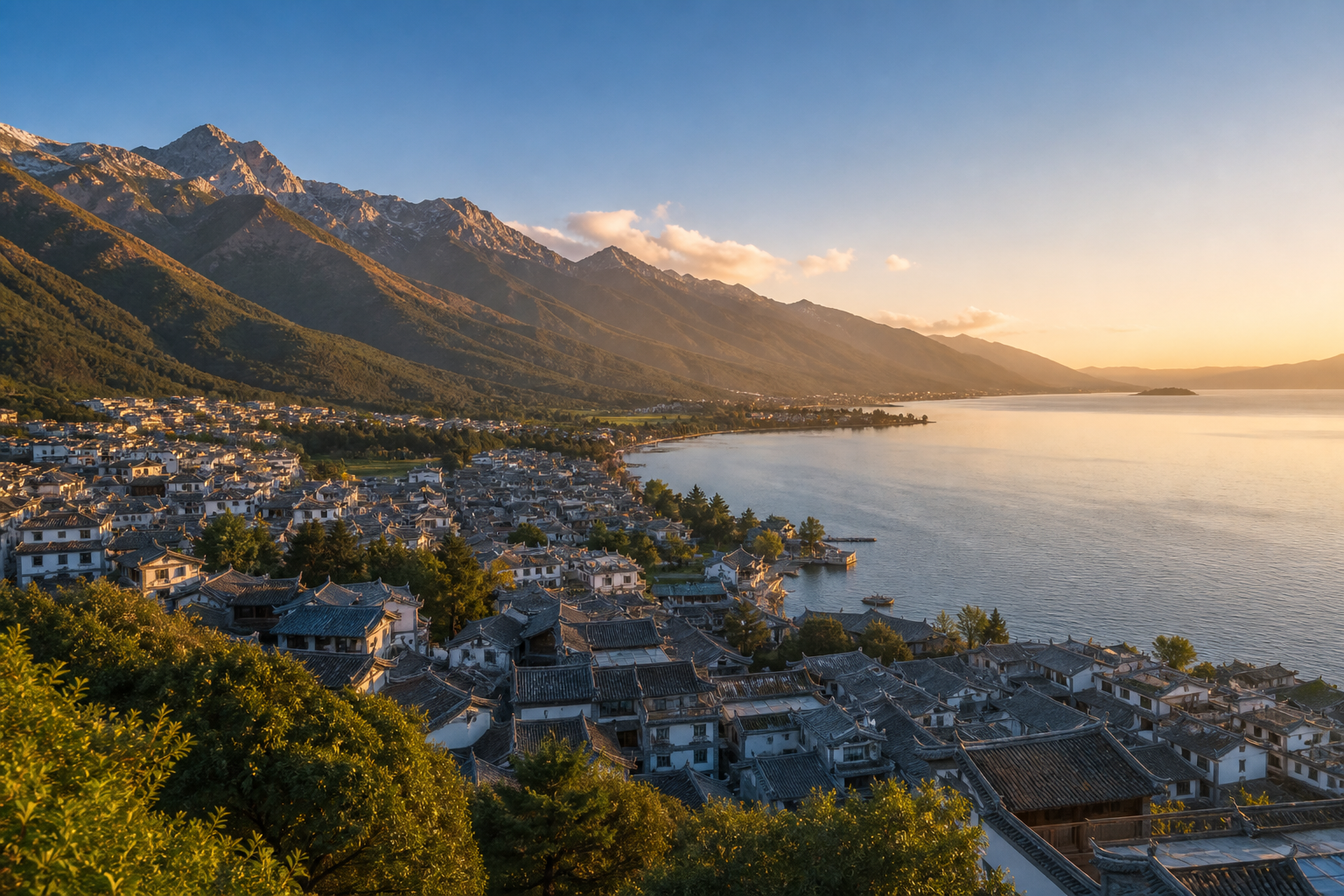
Cangshan is not the background; it is the structure
Cangshan is not a decorative ridge behind Dali. It is the structure that explains the city: mountain wall to the west, Erhai opening to the east, old town, fields, and villages held between them.
For first-time visitors, the key is not the highest viewpoint. It is understanding how the mountain shapes water, weather, streets, temple positions, village patterns, and the way Dali feels.
Seeing the mountain, entering it, and hiking it are different
Seeing Cangshan can happen from the old town, Three Pagodas, west Erhai, or a rooftop. Entering Cangshan means using a cableway or short trail to feel the change in air, vegetation, streams, and views. Hiking Cangshan means committing to route, gear, weather, and descent.
Many visitors mix these together. You do not need a long hike to understand Cangshan. A well-timed cableway and short walk can be more valuable than a poorly planned push to a higher point.
Do not choose cableways only by altitude
Higher is not always better. High-altitude viewpoints can be dramatic, but they are also more exposed to wind, cold, fog, and body response. Mid-mountain cableway routes are often better for first-timers because they give strong views with more control.
If your group has mixed fitness, children, limited time, or you mainly want mountain-lake orientation, choose a lighter mountain day. Save the higher route for a very clear day when your body and schedule have margin.
What to notice besides the view
Look for vertical change: plants, temperature, humidity, cloud movement, stream cuts, and the way the Erhai plain opens below you. UNESCO's description of the geopark emphasizes rugged landforms and ecosystems, not just one viewpoint.
Cangshan's meaning is the contrast between mountain, old town, fields, and lake. The mountain makes Dali legible.
Photographers should think in layers
A perfectly clear blue day is not always the most interesting Cangshan image. Partial cloud, moving shadows, lake reflection, old-town roofs, and mountain scale often create more depth.
Early morning and late afternoon are usually better for mountain-lake composition. Do not spend the best light in a transfer if photography is the point.
Weather rules the mountain
If visibility is poor, Cangshan can become an expensive cloud visit. If wind is strong, cableways and exposed viewpoints may be affected. If rain moves in, paths and stairs become less forgiving.
A good backup plan is not failure. Old-town history, Xizhou, Three Pagodas, a cafe day, or a short lake walk can be better than forcing a mountain plan into bad conditions.
A first-timer's half-day plan
The safest first Cangshan plan is a clear morning, one cableway or foothill entry, a short walk and viewpoint, then a descent before the day becomes crowded or weather shifts. Keep the afternoon for food, rest, old town, or the lake.
If the weather is excellent and your group has energy, extend the walk. If clouds thicken, shorten the route. The goal is not conquest. It is building the mountain-lake scale in your mind.
Who needs the hiking guide
If you only want scenery, photography, or a family-friendly mountain morning, this guide is enough. If you want Jade Belt Road, longer traverses, higher altitude, or less marked routes, read the full Cangshan hiking guide and plan exits.
Dali does not require everyone to become a hiker. But everyone should understand that Cangshan is not scenery pasted behind the city.
After Cangshan, look back at Dali
A good Cangshan day changes how you see the old town and Erhai. You understand why the city sits where it does, why Three Pagodas face the lake with mountain behind, and why the weather refuses to obey a checklist.
If you come down only with a photo, Cangshan is still background. If you come down seeing mountain, lake, town, and villages as one system, the mountain has done its work.