A 3-day Dali itinerary: mountain, lake, old town, and Xizhou without rushing
A first-trip route built around Dali's real geography: old-town history, Cangshan weather, Erhai sections, Xizhou courtyards, and enough recovery time to remember the trip.
Three days is a tradeoff model, not a compressed checklist
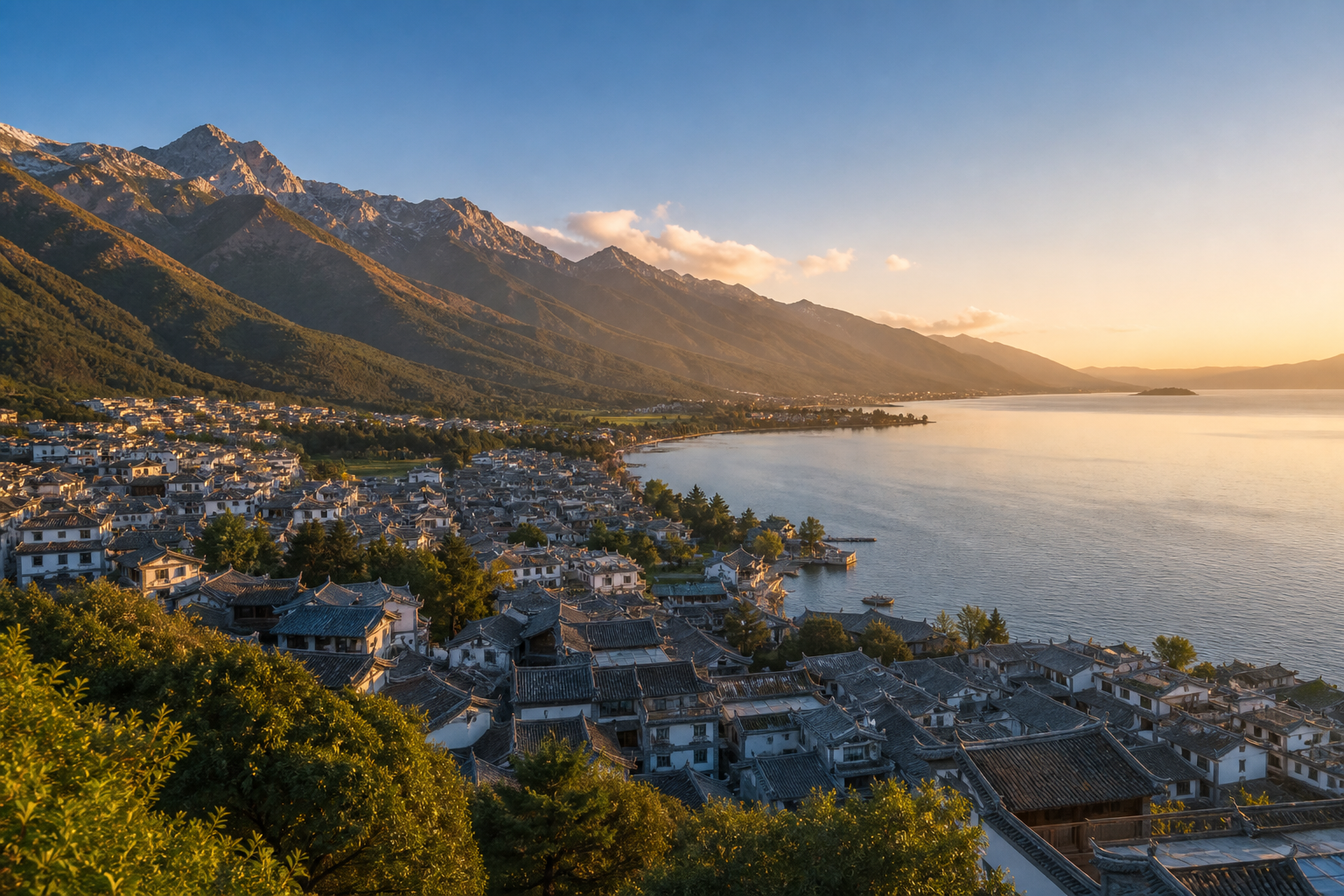
Three days can give you a meaningful first read of Dali, but only if you accept tradeoffs. Dali is not a string of isolated sights. It is a mountain-lake basin: Cangshan west, Erhai east, old town and villages in between.
This route uses that structure. Day 1 builds historical and geographic orientation. Day 2 saves the best weather window for Cangshan. Day 3 uses west Erhai and Xizhou to understand daily life. It does not try to do everything.
Before you start: choose one base
For three days, avoid changing hotels. Dali Old Town or its edge is the safest first base: food, cafes, transport, Cangshan access, Three Pagodas, and weather backups are all easier. West Erhai works if lake mornings matter and you confirm transport back to the old town.
Xizhou and Shuanglang can be good stays, but not always as a first three-day base. Xizhou is slower and better for Bai courtyards. Shuanglang is lake-view heavy but adds movement costs if you want Cangshan, the old town, and west-Erhai cycling.
Day 1 morning: read the old town as a map
Do not rush straight to the lake. Start with Dali Old Town as a historical map: gates, street axis, quieter lanes, courtyard scale, rooflines, and Cangshan behind everything. The town you see today is a layered mix of Ming-era urban frame, Bai architectural language, and modern tourism.
As you walk, separate three things: the city skeleton, local building language, and commercial performance. This simple discipline will make Xizhou, Three Pagodas, and the villages easier to understand later.
Day 1 afternoon: Three Pagodas or a short lake section
If history matters, spend the afternoon at the Three Pagodas area. It pulls Dali away from shopping-street old town and back toward Nanzhao, the Dali Kingdom, Buddhist authority, and the mountain-lake layout.
If you would rather decompress, choose Longkan, Caicun, or a short west-Erhai section. This is not your full lake day. It is a way to let your body adjust to highland sun, wind, distance, and slower pacing.
Day 2: give the clearest morning to Cangshan
Cangshan deserves the best-weather morning, not the leftover afternoon. It is not a backdrop; it is a real mountain range with valleys, streams, vertical ecosystems, wind, clouds, and exposure. Choose a cableway walk, Jade Belt Road section, or stronger hike based on visibility, wind, energy, and descent options.
Do not overfill the evening. A good mountain day often ends with food, shower, and a quiet table. If clouds close in, switch the order: use this day for Xizhou or old-town depth and save the mountain for the next morning.
Day 2 backup: bad mountain weather is not failure
If visibility is poor, wind is strong, or rain moves in, do not force Cangshan. Dali works better when you let weather participate in the itinerary.
Backup options include Xizhou, the Three Pagodas, an old-town museum route, a short west-Erhai walk, or simply a cafe planning block. A three-day itinerary needs one interchangeable day or the whole plan becomes fragile.
Day 3: Erhai in sections, not as a trophy loop
Spend the last day around Erhai, but do not assume the 128-kilometer-style full loop is the best version. For most first-time visitors, the west-Erhai ecological corridor is more rewarding: Longkan, Caicun, Panxi, Xizhou approaches, villages, wetlands, and slow stops.
A good lake day is not about proving distance. It is about seeing how water, fields, villages, Cangshan views, and daily life fit together. Ride a section, walk a section, and leave time to sit.
Where Xizhou fits
Xizhou can be your third-day anchor or your bad-weather substitute for Cangshan. It is valuable not because it is another old town, but because it shows Bai courtyards, screen walls, gate towers, markets, field roads, and a slower local rhythm outside Dali Old Town.
If architecture and history matter, do not reduce Xizhou to lunch. Give it a real half day: market, lanes, courtyards, fields, and a slower return.
Adjustments by traveler type
History lovers: old town and Three Pagodas on Day 1, Cangshan or deeper historical sites on Day 2, Xizhou on Day 3. Hikers: keep Day 2 and Day 3 swappable. Lake and photography travelers: start early on Day 3 and avoid a heavy afternoon transfer.
Digital nomads and long-stay testers should leave a quiet block each day to test desk comfort, Wi-Fi, cafes, food, laundry, and night noise. You are not only traveling; you are testing whether Dali can hold ordinary days.
What you should know after three days
A good three-day Dali trip should leave you knowing that Cangshan is not a backdrop, Erhai is not one photo stop, Old Town is not the whole city, and Xizhou is not just another old town.
If you leave only remembering where it was crowded and where it was pretty, the trip was too thin. If you can describe Dali through mountain, lake, old town, villages, weather, and time, the three days worked.