Dali for digital nomads and long-stay travelers
A grounded long-stay guide that separates scenery from productivity: ordinary workdays, base choice, cafes, internet backup, payments, visas, community boundaries, and one-week testing.
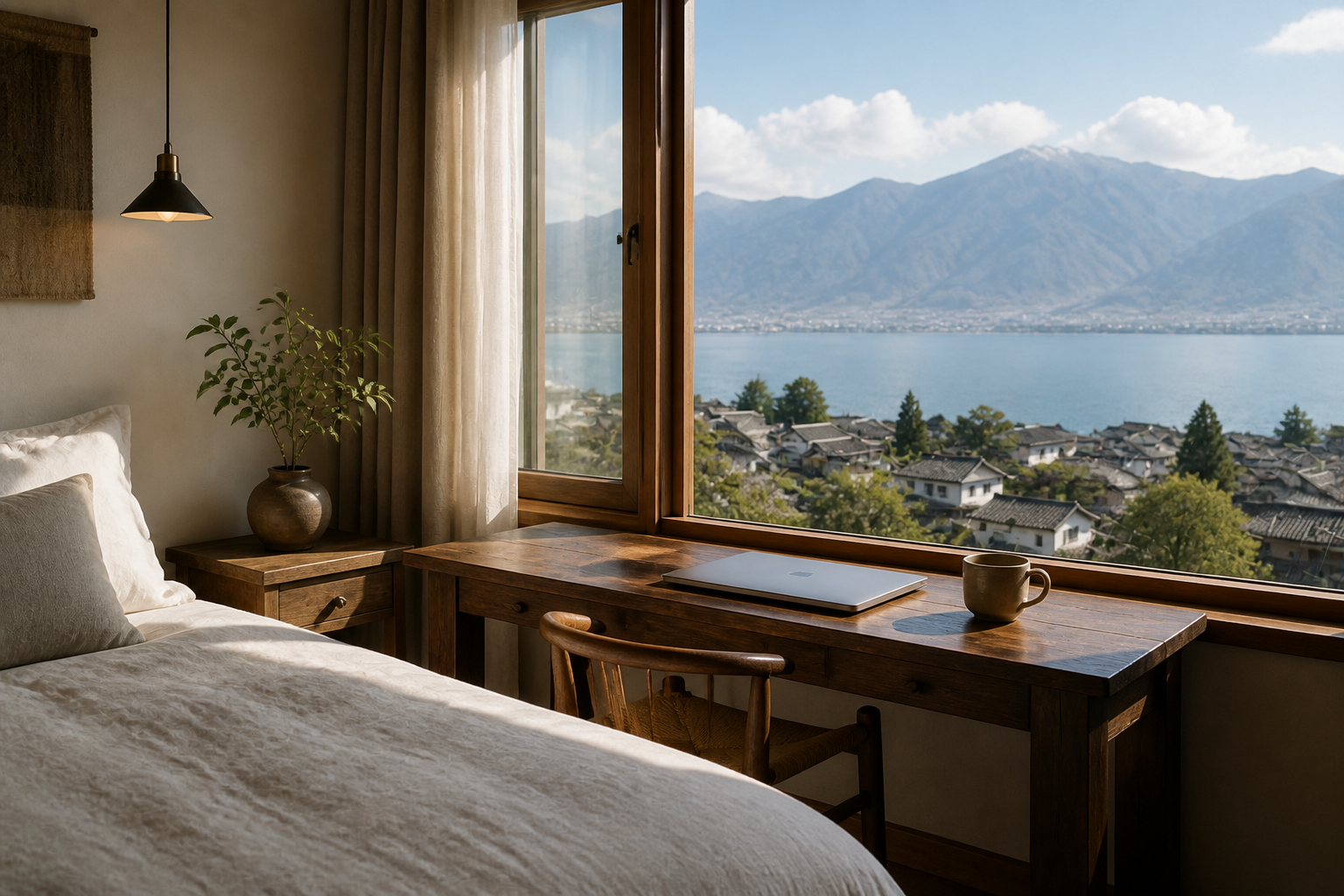
Dali works when ordinary days work
Dali often appears in conversations about remote work, creative escape, and slower living in China. But a successful long stay is not built from views alone. It is built from sleep, a desk, repeatable food, laundry, transport, stable internet, and a social rhythm that does not consume your work time.
Before committing to a month, test a normal weekday: wake up, work, eat, walk, handle errands, and sleep. If a non-sightseeing day still feels good, Dali may work as a base.
Do not mistake vacation mood for work setup
Lake views, rooftops, coffee, and mountain air can make a place feel productive before you have done any work there. A real work base needs a colder test: can you take calls, write, design, edit, code, upload files, and recover on an ordinary day?
Check desk height, chair comfort, noise, curtains, outlets, heating or cooling, drinking water, laundry, video-call background, Wi-Fi, and mobile signal. A beautiful room that fails these tests will become tiring quickly.
Choose a base by work friction
Old Town gives food, cafes, and convenience, but can be noisy. West Erhai gives calmer mornings and walks, but village sections vary. Xizhou can be inspiring and quieter, but logistics need testing. Shuanglang can be beautiful, but may be less efficient for work routines.
Different jobs need different bases. Frequent calls need quiet and stable backup. Writers and designers may need long walks and fewer interruptions. Social or creative travelers may want cafes and people nearby.
Test one week before booking a month
If you have not lived in Dali before, test a week before committing to a month. Work normally for two or three days, handle errands one day, go to Cangshan or Erhai one day, use cafes one day, and then decide with evidence.
A week reveals night noise, lunch options, delivery range, laundry, rain-day mood, internet stress, cafe crowding, social distractions, and transport costs. Those are the details that determine long-stay quality.
A weekly rhythm that actually works
Many long-stay travelers do best with early work blocks, a midday meal, a late-afternoon walk or ride, and one or two planned exploration days per week. Treat Cangshan and Erhai as recurring companions rather than sights to consume immediately.
If every day becomes a trip, you are not living in Dali; you are burning out in a prettier place. The core of long stay is making ordinary workdays sustainable.
Community, cafes, and boundaries
Dali's cafe and guesthouse culture can make it easy to meet people. That is a strength for solo travelers and creative workers. It is also a trap if every conversation turns into a long night.
Protect work hours first, then seek community. Cafes are good for focused blocks, route advice, and human contact, but a good long-stay room should still work when weather is bad, cafes are full, or you need a quiet call.
Payments, internet, and visa reality for overseas visitors
Foreign visitors should check current China visa or transit rules, payment setup, SIM or eSIM options, work-tool access, health insurance, and tax obligations before treating Dali as a remote-work base. There is no single universal remote-work answer that applies to everyone.
In practice, prepare Alipay, WeChat Pay, and some cash backup before arrival. Check National Immigration Administration updates for transit policies such as the 240-hour visa-free transit framework. These details are not romantic, but they determine whether you can pay, ride, check in, eat, and work smoothly.
Build redundancy instead of relying on luck
Use Wi-Fi plus mobile data, a room plus a cafe, one local contact plus your own research, one main route plus a weather backup, and one primary payment method plus a backup. Dali rewards flexibility, but work still needs systems.
If your job depends on stable calls, cross-border tools, or large uploads, stress-test those during your trial week. Do not wait until the first real workday to discover the weak point.
Who Dali is best for
Dali is best for people who like highland light, walking, reading, writing, cycling, mountain weather, slow social life, and some self-management. It is less ideal for people who need big-city speed, dense nightlife, or frictionless international infrastructure every day.
If your work can tolerate a slower rhythm, Dali can become more than a scenic stop. It can become a week structured by Cangshan, Erhai, cafes, simple meals, and weather.