Cycling around Erhai Lake: route, timing, stops, and realistic sections
A deeper guide to choosing the right Erhai ride: west-side ecological corridor, 46 km slow rides, 128 km loops, wind, sunrise sections, villages, and how not to turn the lake into a chore.
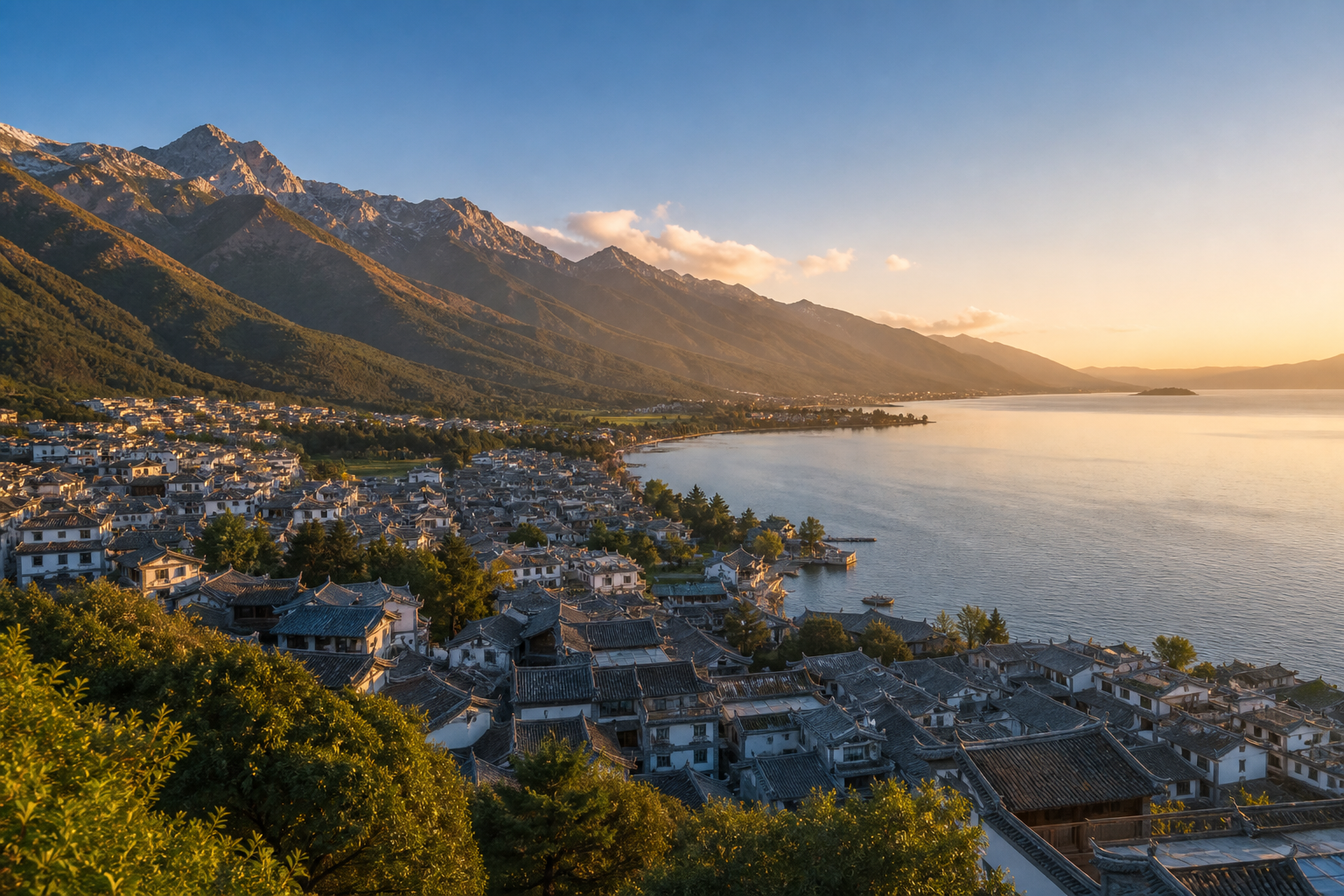
Understand the lake before choosing distance
Erhai is not just a blue ring on a map. It is a highland lake with villages, wetlands, farmland, tourist segments, working communities, vehicle roads, and protected shoreline. The real cycling question is not whether you can circle it. It is what kind of day you want.
Do you want a landscape ride, a photography morning, a casual social day, village stops, or an endurance challenge? Each answer leads to a different route.
West Erhai is the best first route family
For most first-time visitors, the west-Erhai ecological corridor is better than a full loop. Public route guides often describe the west-side corridor from Yangnan Stream to Taoyuan Wharf as about 46 kilometers, with villages, guesthouses, and food along the way.
Its value is not speed. It is the ability to stop. Longkan, Caicun, Panxi-style bends, Xizhou approaches, wetlands, and village edges are more rewarding when you are not chasing mileage.
A 46 km ride still needs planning
Forty-six kilometers can sound modest, but highland sun, wind, stops, bike quality, and mixed fitness change the feel. Casual riders should not treat the whole west-side corridor as a required achievement.
Choose 10 to 20 kilometers if you mainly want lake air and photos. Choose a longer half-day if you want movement. If you are riding with children or mixed fitness levels, prioritize clear return options over distance.
The full loop is an endurance choice
The full Erhai loop is often discussed around the 128 kilometer scale. For ordinary travelers, that should not be the default. It is an endurance ride that needs better bikes, food planning, wind judgment, daylight, and traffic awareness.
The loop can be meaningful for strong riders, especially over two days. But do not confuse finishing a ring with understanding the lake. Many visitors remember one good west-side morning more clearly than an exhausted full loop.
Morning is more valuable than midday
Start early. Morning light is softer, the lake is calmer, and you have more options if weather changes. Longkan, Caicun, and west-lake sections are often better when you give them quiet morning time.
Midday is not impossible, but highland sun makes fatigue and dehydration more likely. Photographers should protect early and late light instead of spending those hours on transfers.
Wind, sun, and supplies are the hidden difficulty
Dali wind can turn an easy-looking ride into work. Tailwind can make you overconfident; headwind can make a short return feel long. Sun exposure is also stronger than many visitors expect.
Bring water, sun protection, a charged phone, and a real return plan. Do not assume every beautiful stretch has food, shade, rental support, or transport at the exact moment you need it.
The lake is not only water
A good Erhai day includes villages, fields, wetlands, and Bai daily life. Caicun, Longkan, Xizhou, Zhoucheng, Taoyuan-style sections, and quieter village edges all show different relationships between people and the lake.
If you stay several days, split Erhai into multiple experiences: sunrise, Xizhou fields, an east-side view day, or a pure walking day. The lake becomes richer when it is not one forced task.
Choose by rider type
Casual travelers should choose 10 to 20 kilometers with clear return options. Photographers should ride early and stop often. Families and mixed groups should pick sections with rentals, food, and easy exits. Strong riders can consider longer loops if wind, traffic, bike quality, and daylight align.
Long-stay travelers do not need to complete Erhai at once. The lake works beautifully as a repeatable recovery route.
End with energy, not proof
A good Erhai ride should leave you with enough energy to eat, talk, edit photos, and remember where you stopped. It should not end as a sunburned proof of suffering.
The point is to feel how the basin works: Cangshan behind villages, fields between road and water, light changing by hour, and daily life arranged along the shore.